

I recently read several articles by prominent VCs and technologists about the future of software and service delivery. This article consolidates their insights.
The software and service delivery landscape is undergoing a significant transformation as we move from traditional models to innovative frameworks that prioritize outcomes over mere functionality. This evolution is characterized by the emergence of Outcome-as-a-Service (OaaS) and Results-as-a-Service (RaaS), which fundamentally shift how businesses approach productivity and service delivery.
The Shift from Software to SaaS
Historically, businesses relied heavily on software to enhance productivity. This reliance necessitated substantial human effort for management, upgrades, and maintenance. The introduction of Software-as-a-Service (SaaS) revolutionized this dynamic by allowing companies to access software via subscriptions, thus eliminating the need for extensive IT overhead and enabling greater focus on core business activities[1]. SaaS effectively addressed the complexities associated with traditional software deployment, making it easier for organizations to leverage technology without the burdens of installation and upkeep.
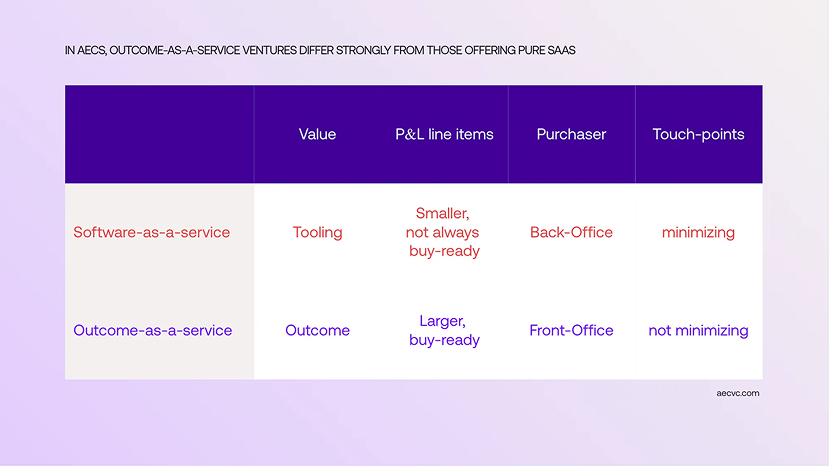
Image Credits: https://www.foundamental.com/perspectives/outcome-as-a-service
The Rise of AI and OaaS
As we entered the era of artificial intelligence (AI), a new paradigm emerged. Unlike software and SaaS, which primarily assist humans in completing tasks, AI has the capability to perform tasks autonomously. This capability has led to discussions around Outcome-as-a-Service (OaaS), where the focus shifts from merely using tools to achieving desired outcomes directly[1]. This model recognizes that the ultimate goal of utilizing technology is to achieve specific results rather than just improving efficiency through software.
OaaS represents a significant departure from traditional SaaS models by emphasizing the delivery of outcomes tailored to user needs. For instance, rather than providing a tool that requires user input and management, OaaS would deliver completed work products or results that fulfill specific business objectives[1]. This shift not only streamlines operations but also opens up new market opportunities for companies willing to innovate beyond conventional software offerings.
RaaS: Delivering Results Directly
Parallel to OaaS is the concept of Results-as-a-Service (RaaS), which similarly emphasizes delivering tangible results rather than just software capabilities. RaaS leverages AI agents capable of executing multi-step processes to produce desired outcomes efficiently. This model aligns with the idea that customers ultimately seek results — akin to wanting “holes” rather than “drills” — and thus positions RaaS as an evolution of SaaS that focuses on fulfilling these needs directly[3].
For example, a company might utilize AI agents to automate complex tasks such as data analysis or report generation, providing clients with ready-to-use insights instead of requiring them to navigate through software interfaces themselves. This approach not only enhances productivity but also redefines customer engagement by aligning service delivery with client expectations for immediate results[3].
Selling Work Instead of Software
A notable trend within this framework is the shift towards selling work itself rather than just software tools designed to improve productivity. Companies like EvenUp exemplify this approach by offering complete work products — such as legal demand packages — rather than merely enhancing the productivity of legal teams through software solutions[2]. This model allows businesses to capitalize on AI’s capabilities while providing clients with high-value outputs that significantly reduce reliance on human labor for repetitive tasks.
This transition represents a broader understanding that as AI technologies mature, they can effectively replace certain types of work traditionally performed by humans. By focusing on delivering defined outcomes or work products, companies can create more efficient workflows and better meet their clients’ needs.
Conclusion
The evolution from traditional software models through SaaS towards OaaS and RaaS marks a pivotal moment in how businesses operate and deliver value. By prioritizing outcomes over tools, organizations can leverage AI’s capabilities to transform their service offerings fundamentally. As this landscape continues to evolve, companies that embrace these new paradigms will likely lead the charge in redefining productivity and service excellence in the digital age.